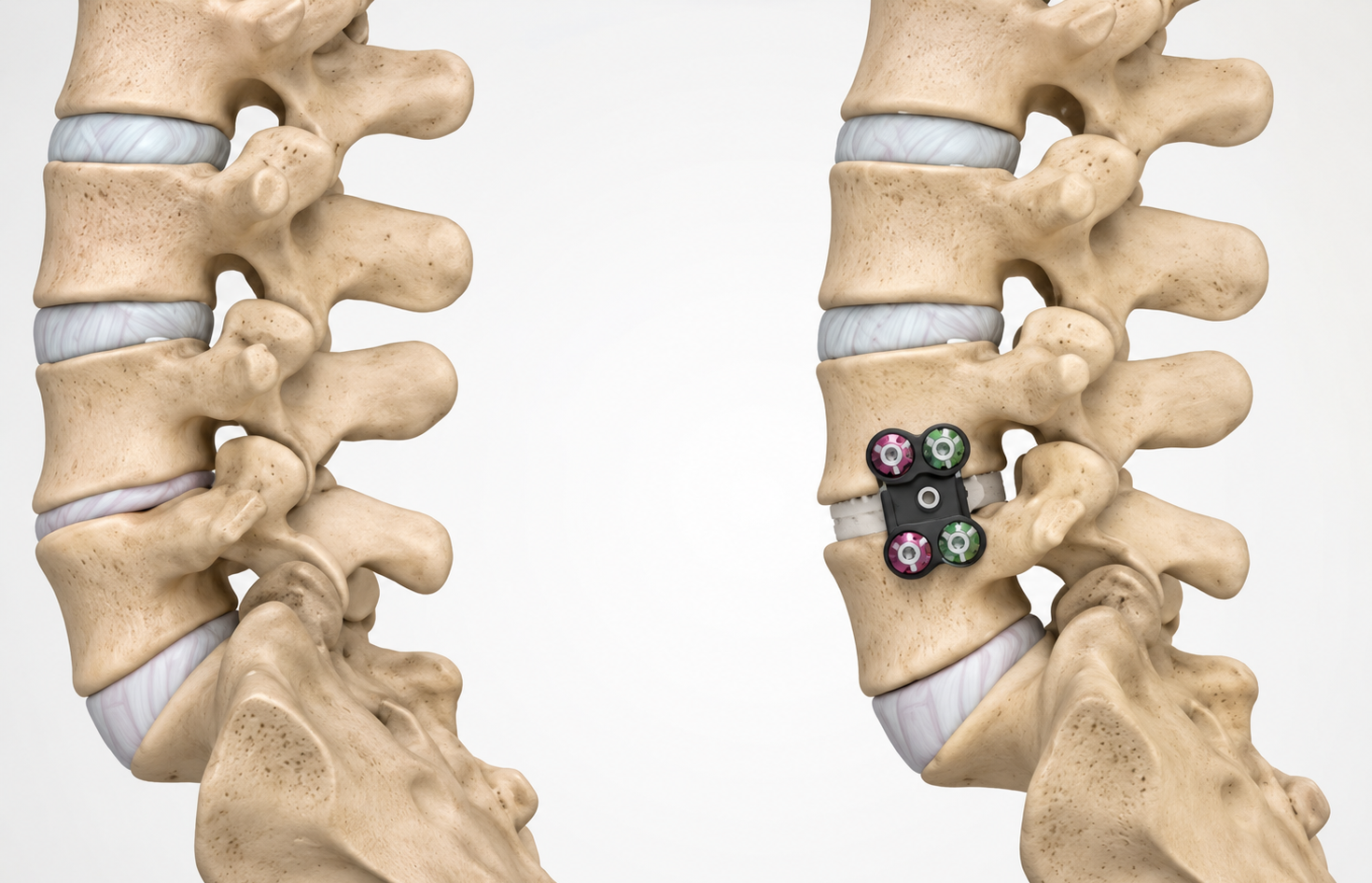
A range of specialized surgical approaches is utilized to address conditions affecting the lower spine, including nerve compression, disc pathology, and structural instability. Each procedure is carefully selected based on the underlying source of symptoms, allowing for targeted intervention that prioritizes both effectiveness and preservation of surrounding anatomy.
Through the use of minimally invasive techniques and advanced surgical methods, these procedures are designed to support efficient recovery and improved long-term outcomes. Whether relieving pressure on spinal nerves or enhancing stability, the focus remains on restoring function and helping patients return to daily activity with greater confidence.
Lumbar Surgery – We Specialize In:
Lateral Interbody Fusion
A minimally invasive approach performed through small side incisions to restore spinal alignment and stability while reducing pressure on affected structures.
A common procedure designed to relieve pressure on spinal nerves caused by conditions such as herniated discs or spinal stenosis, helping reduce pain and improve mobility.
A minimally invasive procedure that removes the portion of a herniated disc compressing a nerve, providing targeted relief and restoring normal nerve function.
A surgical technique focused on stabilizing the spine and relieving nerve pressure by correcting motion between vertebrae through a less invasive approach.
A Precise Diagnosis is the Foundation of Effective Treatment.
Determining the source of lumbar spine symptoms requires a comprehensive and methodical evaluation. The process begins with a detailed review of medical history and a thorough physical examination, allowing for an initial understanding of pain patterns, functional limitations, and neurological involvement. This clinical assessment helps guide the next steps and narrow down potential underlying conditions.
Advanced imaging and diagnostic testing play a critical role in confirming findings and providing greater clarity. Tools such as MRI and radiographic imaging offer detailed insight into the spine’s structure, while specialized nerve studies may be used to evaluate how well signals are traveling through affected areas. These diagnostics allow for a more accurate identification of conditions such as disc herniation, nerve compression, or structural instability.
By combining clinical evaluation with imaging and testing, a clear and informed diagnosis can be established. This ensures that any recommended treatment—whether surgical or non-surgical—is aligned with the patient’s specific condition, goals, and long-term health outcomes.
Your journey to wellness starts here. Schedule your appointment today.