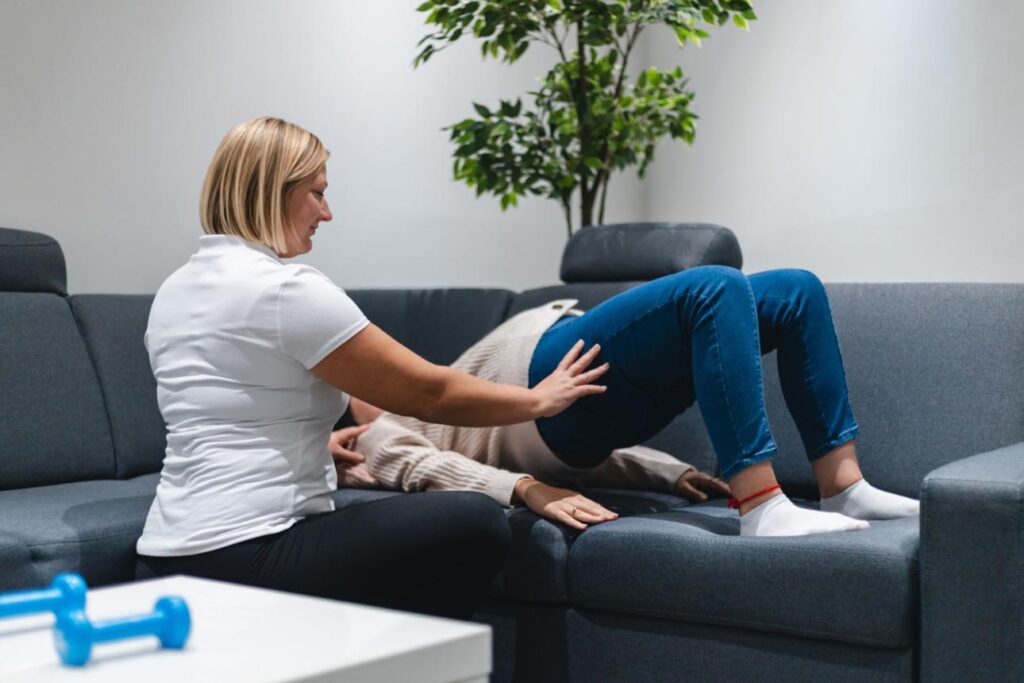
Physical Therapy for Spine Care: Non-Surgical Treatment Options
Physical Therapy: At a Glance
Physical therapy can be one of the most helpful parts of spine care when it is used thoughtfully. In Dr. Ronjon Paul’s practice, therapy is tailored to the diagnosis, the stage of recovery, the patient’s goals, and the overall treatment plan, rather than applied as a generic step.
A Thoughtful, Personalized Approach
Physical therapy is a central part of modern spine care, but it is not equally effective in every situation. Some patients improve significantly with a well-designed program, while others may need therapy as part of a broader plan that includes imaging, injections, or surgery.
The key is understanding why symptoms are happening and matching treatment to that specific problem. In Dr. Paul’s practice, therapy is used strategically, with careful attention to anatomy, symptom patterns, imaging findings, and each patient’s goals.
Treatment Philosophy
Therapy is most valuable when it is:
diagnosis-specific, well guided, and introduced at the right time. When used appropriately, it can improve function, rebuild confidence, and support long-term recovery.
It can also play an important role in preparing patients for surgery and helping them recover more efficiently afterward. The focus is not just on reducing pain, but on improving how the body moves and performs over time.
Helps reduce guarding, improve mobility, and better understand symptom behavior.
Structured Non-Operative Care
Targets strength, posture, and endurance to improve function and reduce recurrence.
Prehabilitation
Pre-surgery conditioning and education for select patients.
Post-Operative Recovery
Critical for restoring movement, strength, and daily function after surgery.
When Physical Therapy Works Best
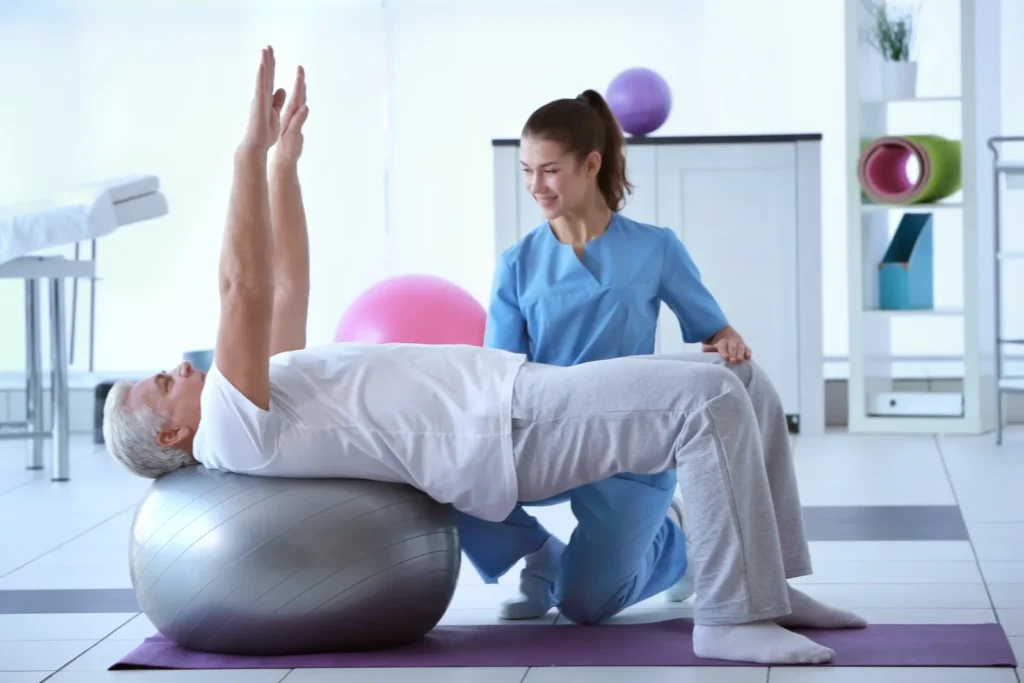
Physical therapy tends to be most effective when symptoms are related to deconditioning, muscular imbalance, limited mobility, or inefficient movement patterns. In these situations, strengthening and retraining the body can significantly improve function and reduce discomfort.
For chronic low back pain in particular, exercise-based rehabilitation has consistently been shown to improve quality of life and daily function. Pain relief can vary, but improved movement and confidence are common outcomes.
Common Therapy Approaches
Most physical therapy programs include a combination of strengthening, movement retraining, and conditioning. This often involves improving core stability, correcting posture, and gradually increasing activity levels.
The exact program varies depending on the patient, but the goal is always the same: to restore efficient movement and build long-term resilience rather than relying on temporary symptom relief.
Recovery After Spine Surgery
After spine surgery, physical therapy often becomes one of the most important parts of recovery. It helps restore movement, rebuild strength, and guide patients back to normal activities in a safe and structured way.
Timing is important. Therapy should begin early enough to support recovery, but not so aggressively that it interferes with healing. Because every procedure and patient is different, post-operative therapy is always individualized.
Q: Do all patients need physical therapy before spine surgery?
No. Many patients benefit from conservative care first, but some problems with clear structural compression, progressive weakness, or instability may justify earlier procedural or surgical treatment.
Q: How soon after spine surgery does therapy begin?
That depends on the diagnosis, the operation, healing needs, and your progress. In Dr. Paul’s practice, therapy is often introduced relatively early, especially after minimally invasive procedures, but the program is customized rather than one-size-fits-all.
Q: Can physical therapy help me avoid surgery?
In many cases, yes. Therapy can improve strength, function, movement confidence, and day-to-day tolerance. When there is significant nerve compression or instability, it may still help, but it may not fully correct the underlying problem.
Q: Is all physical therapy the same for spine problems?
No. Results can differ substantially depending on the diagnosis, the therapist’s experience, the specific exercises chosen, and how well the program matches the patient’s goals and stage of recovery.
Not Sure If This Is What You’re Experiencing? Schedule an Appointment Today.
Whether you are trying to avoid surgery, preparing for surgery, or recovering after surgery, Dr. Paul and his team work to match the treatment plan to the diagnosis, your goals, and the pace that makes sense for you.
References
Hayden JA, van Tulder MW, Malmivaara AV, Koes BW. Exercise therapy for treatment of non-specific low back pain. Cochrane Database Syst Rev. 2005;(3):CD000335.
Weinstein JN, Tosteson TD, Lurie JD, Tosteson AN, Blood EA, Hanscom B, Herkowitz H, Cammisa F, Albert T, Boden SD, Hilibrand A, Goldberg H, Berven S, An H. Surgical vs nonoperative treatment for lumbar disk herniation: the Spine Patient Outcomes Research Trial (SPORT): a randomized trial. JAMA. 2006 Nov 22;296(20):2441-2450.
Weinstein JN, Tosteson TD, Lurie JD, Tosteson AN, Hanscom B, Skinner JS, Abdu WA, Hilibrand A, Boden SD, Deyo RA. Surgical versus nonoperative treatment for lumbar spinal stenosis four-year results of the Spine Patient Outcomes Research Trial. Spine. 2010 Jun 15;35(14):1329-1338.
Oosterhuis T, Costa LO, Maher CG, de Vet HC, van Tulder MW, Ostelo RW. Rehabilitation after lumbar disc surgery. Cochrane Database Syst Rev. 2014 Mar 14;(3):CD003007.
McGregor AH, Probyn K, Cro S, Dore CJ, Burton AK, Balagué F, Fairbank J. Rehabilitation following surgery for lumbar spinal stenosis. Cochrane Database Syst Rev. 2013 Dec 9;(12):CD009644.
Nielsen PR, Jørgensen LD, Dahl B, Pedersen T, Tønnesen H. Prehabilitation and early rehabilitation after spinal surgery: randomized clinical trial. Clin Rehabil. 2010 Feb;24(2):137-148.
Owen PJ, Miller CT, Mundell NL, Verswijveren SJJM, Tagliaferri SD, Brisby H, Bowe SJ, Belavy DL. Which specific modes of exercise training are most effective for treating low back pain? Network meta-analysis. Br J Sports Med. 2020 Nov;54(21):1279-1287.
Steffens D, Maher CG, Pereira LSM, Stevens ML, Oliveira VC, Chapple M, Teixeira-Salmela LF, Hancock MJ. Prevention of low back pain: a systematic review and meta-analysis. JAMA Intern Med. 2016 Feb;176(2):199-208.