Understanding Leg Pain, Walking Limitations, and Nerve Compression in the Lower Back
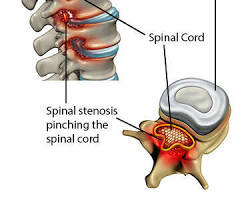
Lumbar spinal stenosis occurs when the spaces in the lower spine narrow, placing pressure on the nerves that travel into the legs. This can lead to pain, heaviness, or fatigue in the legs, especially when standing or walking.
Dr. Paul focuses on accurate diagnosis and a step-by-step treatment approach that prioritizes non-surgical care whenever possible. While the condition can affect mobility, most patients can improve with structured treatment and thoughtful management before surgery is ever considered.
Lumbar spinal stenosis is most commonly caused by age-related changes in the spine. Over time, discs can bulge, joints can develop arthritis, and ligaments may thicken. These changes gradually reduce the space available for the nerves.
As the canal narrows, the nerves can become compressed, particularly during standing or walking when the spine is in a more extended position. This explains why many patients feel relief when sitting or leaning forward, as these positions slightly open the space around the nerves.
Symptoms often develop gradually and are closely tied to activity level and posture. Many patients notice that their ability to stand or walk decreases over time.
Common symptoms include:
Leg pain, heaviness, or fatigue when walking (neurogenic claudication)
Relief of symptoms when sitting or leaning forward
The most common cause is degenerative change in the spine, though disc bulges, arthritis, ligament thickening, and mild vertebral slippage can all contribute to narrowing.
How is a Lumbar Spinal Stenosis Diagnosed?
Diagnosis begins with a detailed clinical evaluation focused on how symptoms change with activity. A key feature of spinal stenosis is that symptoms worsen with standing or walking and improve with sitting, which helps distinguish it from other causes of leg pain.
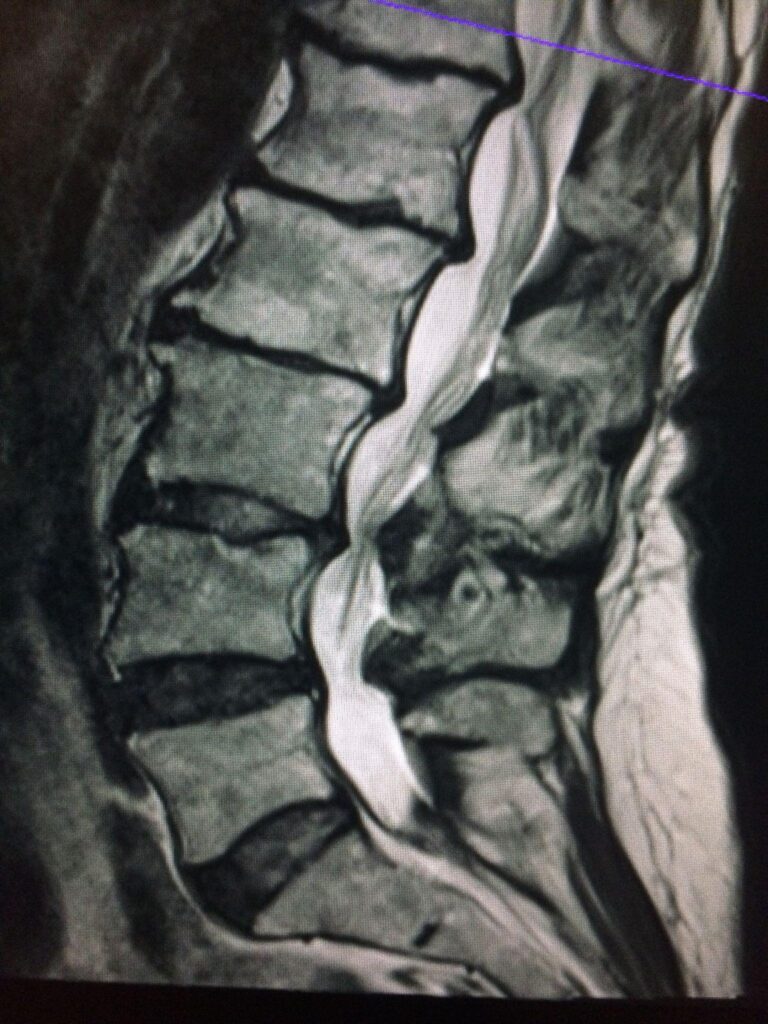
A physical exam evaluates strength, sensation, and walking pattern to determine whether nerve compression is present. MRI is the most important imaging study, as it clearly shows narrowing of the spinal canal and nerve involvement. Standing X-rays are often used to assess alignment and identify conditions such as spondylolisthesis, while additional imaging may be used in select cases.
This combined approach ensures that imaging findings are interpreted in the context of real symptoms.
Many patients with lumbar spinal stenosis can be managed effectively without surgery, particularly in mild to moderate cases.
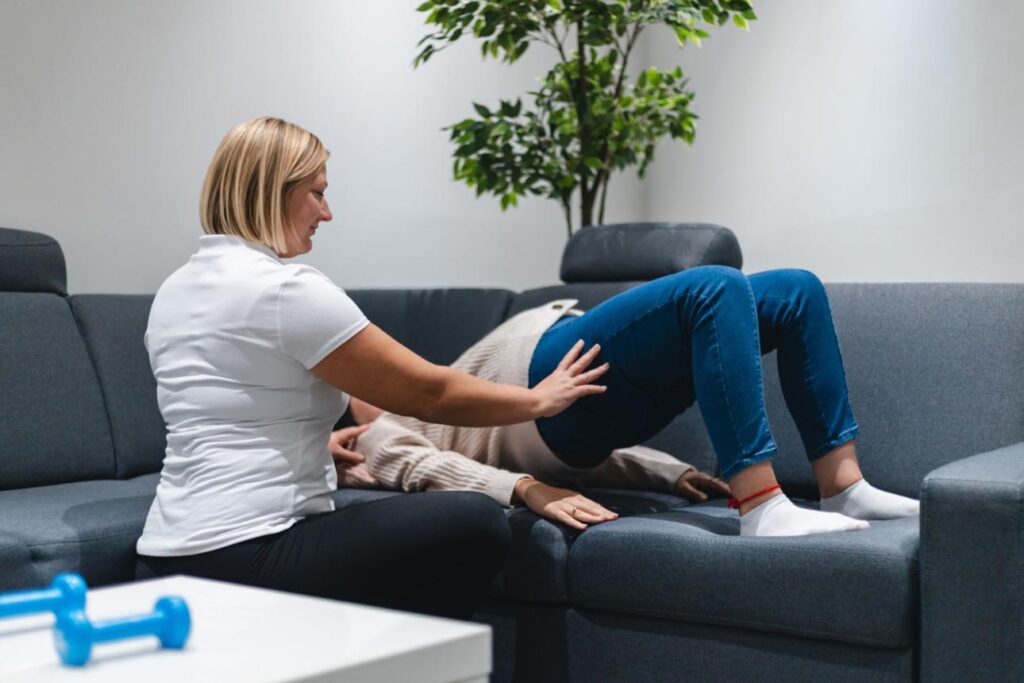
Treatment focuses on improving walking tolerance, reducing nerve irritation, and maintaining an active lifestyle. Physical therapy is often the foundation, using exercises that slightly flex the spine to create more space for the nerves while strengthening the core and supporting muscles. Medications may be used to manage inflammation or nerve-related discomfort, and in some cases, epidural injections can provide temporary relief to support participation in therapy.
Lifestyle adjustments also play an important role. Simple changes such as taking breaks when walking, improving posture, and using supportive positioning can significantly improve day-to-day function.
When Is Surgery Necessary?
Surgery is considered when symptoms continue to limit daily function despite a structured course of non-surgical care. This often includes reduced walking distance, persistent leg pain, or progressive weakness that affects quality of life.
In these cases, the goal of surgery is to relieve pressure on the nerves and improve mobility. Many patients benefit from lumbar decompression procedures, which create more space for the nerves. In situations where the spine is unstable, additional stabilization through fusion may be recommended.
The decision is made carefully and collaboratively, ensuring that treatment aligns with both the clinical findings and the patient’s goals.
Struggling with Walking or Standing for Long Periods? Schedule an Appointment Today.
Munakomi S, et al. Spinal Stenosis and Neurogenic Claudication. NCBI Bookshelf; updated 2023.
Walter KL. Lumbar Spinal Stenosis. JAMA Patient Page. 2022.
Schneider MJ, et al. Comparing the Effectiveness of Nonsurgical Treatments for Patients with Lumbar Spinal Stenosis. NCBI Bookshelf; 2019.
Treatment of Degenerative Lumbar Spinal Stenosis: Summary. NCBI Bookshelf.
Gadjradj PS, et al. Decompression alone versus decompression with fusion for lumbar spinal stenosis and low-grade spondylolisthesis: a systematic review and meta-analysis. Spine J. 2023.
Kreiner DS, et al. An evidence-based clinical guideline for the diagnosis and treatment of degenerative lumbar spinal stenosis (update). Spine J. 2013.
Cheng H, et al. Decompression alone or fusion in single-level lumbar spinal stenosis with degenerative spondylolisthesis. BMC Musculoskelet Disord. 2024.
Seip A, et al. Surgeon Recommendation and Outcomes in Patients with Lumbar Spinal Stenosis. JAMA Netw Open. 2025.
National Spine Health Foundation. Stenosis Resources. 2023.