
From the first visit to full recovery, your care with Dr. Ronjon Paul is designed to be thoughtful, individualized, and transparent.
Proudly Affiliated with:

From the first visit to full recovery, your care with Dr. Ronjon Paul is designed to be thoughtful, individualized, and transparent.
Proudly Affiliated with:
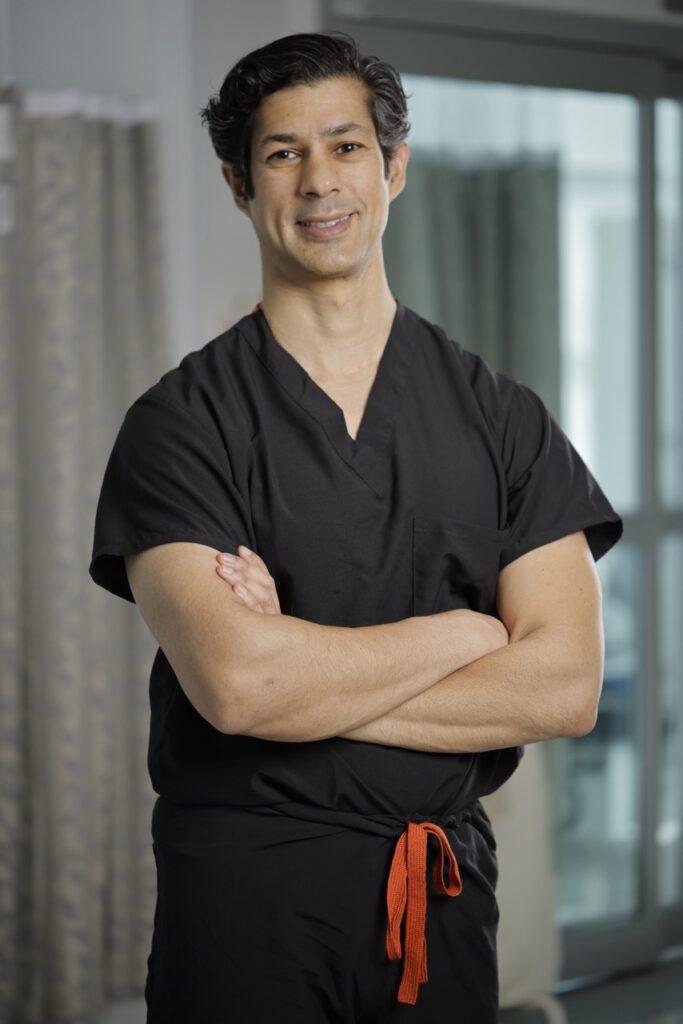
A: Dr. Ronjon Paul is an orthopedic spine surgeon with more than 25 years of clinical
experience and more than 8,500 spine surgeries performed. He is known for combining advanced technical expertise with a thoughtful, reassuring, patient-centered style of care. Patients often seek him out not only for surgery, but also for clarity when they are confused, overwhelmed, or unsure what to do next.
What makes Dr. Paul stand out is that he does not approach every spine problem as something that automatically needs surgery. His philosophy is more measured and more personal. He focuses first on understanding how symptoms are affecting your life, then on identifying the safest and most effective path forward. That often means exhausting the right non-surgical options before discussing an operation.
No. One of the strongest themes in Dr. Paul’s care model is that most patients do not need surgery right away, and many may not need it at all. His long-standing practice philosophy is built around careful diagnosis, thoughtful observation, and coordinated non-operative treatment whenever that is appropriate. For anxious patients, that often comes as a major relief.
A: Dr. Paul treats a wide range of cervical and lumbar spine conditions, including disc herniations, spinal stenosis, radiculopathy, myelopathy, spondylolisthesis, sciatica, revision spine problems, and complex degenerative conditions. He also evaluates patients whose symptoms may not come directly from the spine, which is important because not every abnormal scan explains a person’s pain.
His philosophy is conservative, strategic, and individualized. He views surgery as a tool—not as the starting point. When surgery is needed, he wants it to be the right surgery, for the right reason, at the right time. When surgery is not needed, he works to direct patients toward the best alternative path with the same seriousness and care.
This phrase reflects a calm, thoughtful mindset. It means surgery should not be rushed into out of panic or frustration. Instead, it should be considered carefully in the context of symptoms, physical findings, imaging, functional goals, and response to non-operative care. For many patients, that framing helps reduce fear and restores a sense of control.
That is a very reasonable time to get a second opinion. Many patients come to Dr. Paul after being told they need surgery and want to understand whether that recommendation truly fits their symptoms and goals. Sometimes surgery is appropriate. Sometimes the recommendation can be refined. And sometimes there is a safer or simpler path than patients were first led to believe.
Yes. Dr. Paul has substantial experience with complex cervical and lumbar spine problems, including revision surgery, failed prior procedures, advanced degeneration, and cases referred after other treatments have not gone well. He is frequently seen as a surgeon people turn to when the situation feels confusing, high stakes, or technically demanding.
Because of his judgment as much as his technical skill. Referring physicians often value surgeons who are precise, honest, and selective—especially in spine care, where unnecessary surgery can create long-term problems. Dr. Paul has developed a reputation as a trusted resource for difficult decisions, second opinions, and complex reconstructions, and that trust extends across both patients and medical colleagues.

Yes. Dr. Paul has extensive experience with minimally invasive spine techniques and
motion-preserving strategies when they are appropriate. He has also been involved in peer education, surgical teaching, and industry collaboration around advanced spine procedures. Just as importantly, he is careful not to force those technologies into situations where a more traditional or more durable solution would make better sense.
Yes. Dr. Paul was an early adopter of minimally invasive spine surgery in the Chicagoland area in the early 2000s, at a time when these techniques were still evolving. He has since mentored many surgeons locally and beyond, helped refine modern instrumentation and procedural workflows, and contributed to the broader adoption of these approaches. Over time, this experience has positioned him as a national leader in minimally invasive and motion-preserving spine care. For patients, that translates into a surgeon who understands both the strengths and the limitations of newer technologies and applies them thoughtfully
rather than automatically.
He looks at the whole picture. That includes the patient’s symptoms, neurologic exam, imaging findings, daily functional limitations, prior treatment history, and personal goals. He also considers whether the pain pattern actually matches the abnormality seen on a scan. This is especially important because many people have MRI findings that sound serious but are not the real cause of their symptoms.
The first visit is usually more thoughtful and more conversational than people expect. Dr. Paul reviews the history carefully, talks through how symptoms are affecting work, sleep, exercise, and peace of mind, and then correlates that information with the imaging. The goal is not just to label the problem, but to help the patient feel grounded and understand what comes next.
Yes. This is one of the most important parts of the visit. Many patients come in frightened by words like degeneration, stenosis, disc bulge, or herniation. Dr. Paul and his care team help break those terms down into plain language, explain which findings are common and which are important, and put the scan in the context of real symptoms rather than fear.
That is very common in spine care, and it is something Dr. Paul’s team takes seriously. Good spine care is not only about anatomy—it is also about how people process uncertainty, pain, and risk. The goal is to provide enough explanation to reduce unnecessary fear without minimizing what you are going through. Patients often feel calmer once they understand the difference between a concerning problem and a manageable one.
Dr. Paul’s care team helps make the experience more coordinated and less stressful. That includes helping patients navigate the evaluation process, understand next steps, coordinate with physical therapy or pain management when needed, and receive support before and after surgery. The team-based model is meant to keep communication clear and make patients feel supported, not shuffled around.
No. Many patients are evaluated specifically to determine whether surgery can be avoided, delayed, or refined. His role is not just to operate—it is to help patients understand their spine condition clearly and make the best long-term decision for their health and lifestyle.
Yes. His background includes decades of surgical practice, more than 8,500 spine surgeries performed, longstanding recognition as a Castle Connolly Top Doctor, extensive teaching and speaking roles, research activity, and leadership positions in spine surgery. For patients, that means his recommendations are grounded not only in experience, but also in broad exposure to complex cases and evolving best practices.
That Dr. Paul is not just a technically accomplished spine surgeon. He is also a careful decision-maker who believes patients do best when they are informed, respected, and guided through the process with honesty. His care model is built around thoughtful evaluation, strategic treatment, and restoring confidence—whether that leads to non-surgical care or surgery.

