
From the first visit to full recovery, your care with Dr. Ronjon Paul is designed to be thoughtful, individualized, and transparent.
Proudly Affiliated with:

From the first visit to full recovery, your care with Dr. Ronjon Paul is designed to be thoughtful, individualized, and transparent.
Proudly Affiliated with:

Minimally invasive lumbar fusion, most commonly performed as a transforaminal lumbar interbody fusion (TLIF), is a well-established procedure used to treat spinal instability and persistent nerve compression in the lower back.
Dr. Paul performs this procedure using minimally invasive techniques designed to stabilize the spine while limiting disruption to surrounding muscles and soft tissues. When used in the right clinical setting, lumbar fusion can provide durable relief by addressing both nerve compression and the underlying instability driving symptoms.

Lumbar fusion is most effective when there is a clearly defined structural problem, particularly instability within the spine. This commonly includes conditions such as degenerative spondylolisthesis, where one vertebra shifts relative to another, creating both mechanical pain and nerve compression.
Research consistently shows better outcomes when symptoms are leg-dominant, when neurological findings are present, and when imaging clearly matches the patient’s condition. In these cases, fusion provides stability that non-surgical treatments cannot address.
When instability is not present, outcomes become less predictable. This makes proper diagnosis and patient selection one of the most important factors in determining whether fusion is appropriate.
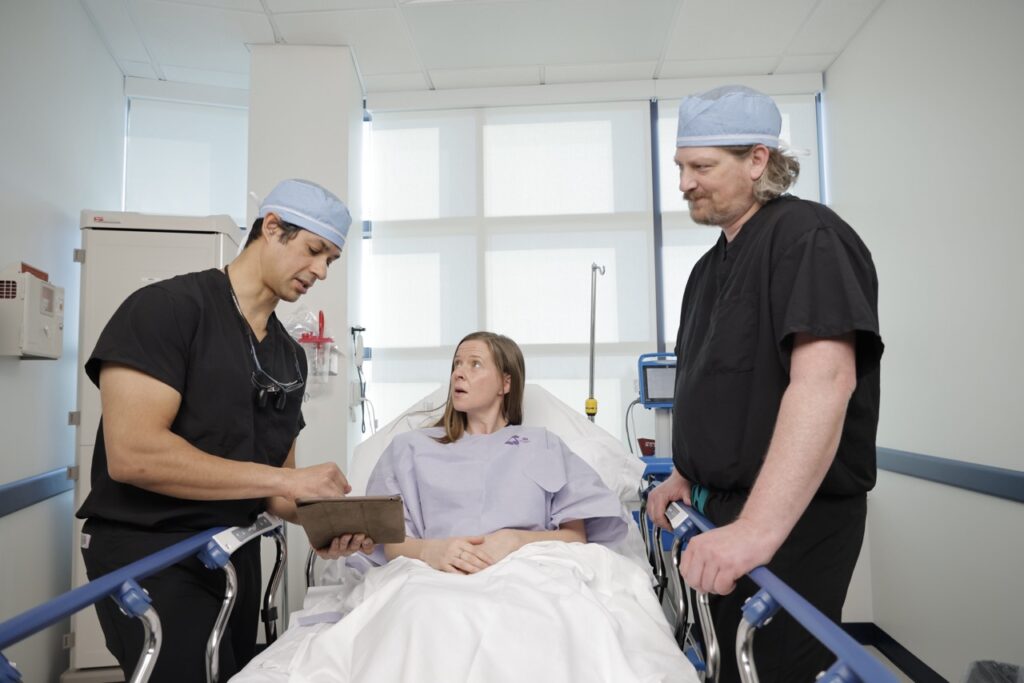
The strongest data guiding treatment decisions comes from the Spine Patient Outcomes Research Trial (SPORT). In patients with degenerative spondylolisthesis and spinal stenosis, surgery that included decompression and fusion produced significantly greater improvements in pain and function compared to non-surgical care.
These improvements were not short-term. Follow-up studies showed that benefits were sustained over four to eight years, with patients reporting higher satisfaction and more meaningful improvement in daily function.
Non-surgical care, including therapy, medications, and injections, can still help some patients. However, when true instability is present, these approaches often do not provide lasting relief. In those cases, surgery offers a more reliable and durable solution.
Minimally invasive TLIF has been extensively studied and consistently demonstrates strong outcomes. Across multiple studies, approximately 70–90% of patients experience meaningful improvement in pain and function after surgery.
In addition to symptom relief, patients typically show significant improvement in disability scores and overall quality of life. Fusion rates, which reflect successful bone healing, are commonly reported in the 85–95% range.
One of the key advantages of minimally invasive techniques is that they achieve the same goals as traditional open surgery while reducing soft tissue disruption. This often results in less early postoperative pain, earlier mobilization, and a smoother initial recovery period.
All spine surgery carries risk, but minimally invasive lumbar fusion has a favorable safety profile when performed in appropriately selected patients.
Across studies, overall complication rates are typically reported between 5–15%. Most complications are minor and temporary, such as transient nerve irritation or wound-related issues. Serious complications are uncommon.
Compared to traditional open fusion, minimally invasive techniques offer several advantages. Blood loss is significantly lower, muscle disruption is reduced, and hospital stays are often shorter. Early recovery is typically faster, while long-term outcomes in pain relief and fusion success remain comparable.
Reoperation rates over several years are generally reported in the 5–15% range and are often related to progression of underlying spinal degeneration rather than failure of the original procedure.


The research consistently supports a clear principle. Lumbar fusion works best when there is a well-defined structural problem, particularly instability, and when symptoms match imaging findings.
For the right patient, most improve and many improve substantially. At the same time, a smaller group may continue to have symptoms or require additional treatment over time.
Minimally invasive techniques do not change the goal of surgery. They refine the approach by reducing surgical impact while achieving the same objectives of decompression and stabilization.
Ultimately, success depends on careful alignment between the diagnosis, the patient’s symptoms, and the goals of surgery.

A decompression removes pressure from the nerves, but in some cases that alone is not enough to address the underlying problem. A fusion is added when there is instability, collapse, or abnormal motion that could persist or worsen after decompression.
This is commonly considered in conditions such as degenerative spondylolisthesis, disc space collapse, recurrent nerve compression with instability, or painful motion at a spinal level. It may also be necessary when deformity needs to be corrected or when prior surgery has left a segment unstable.
The decision reflects Dr. Paul’s overall philosophy that surgery should only be performed when there is a clear mechanical reason for it.
The goal of posterior lumbar fusion is to relieve nerve compression, stabilize abnormal motion, and improve alignment when needed. It also creates the conditions for bone healing across the treated level.
More importantly, the focus is on improving function. The goal is not simply to change imaging, but to help patients move better, tolerate daily activity, and reduce pain in a meaningful way.
Dr. Paul’s approach emphasizes less disruptive exposure when possible, precise decompression of the nerves, and accurate placement of implants.
Depending on the patient’s anatomy and condition, the procedure may include nerve decompression, placement of screws and rods for stability, insertion of an interbody spacer, and use of bone graft material to promote fusion.
Each case is individualized. No two procedures are exactly the same, and the approach is tailored to the specific problem rather than using a standard template.
For a minimally invasive posterior fusion, surgical time is typically about 1.5 hours for a single level and 2 to 3 hours for two levels.
More complex cases, especially those involving prior surgery, can take longer. It’s also important to understand that total time at the hospital is longer than the procedure itself due to preparation, anesthesia, and recovery.
After surgery, patients should expect soreness, stiffness, and fatigue. The first couple of days are usually the most uncomfortable, and the first two weeks are often the most demanding part of early recovery.
Patients are encouraged to begin walking early rather than remaining in bed. Movement helps reduce soreness, improve confidence, and support overall recovery.
Dr. Paul typically communicates with a family member after surgery, and his team follows closely during the immediate recovery period.
Recovery is gradual and occurs in phases. The first two days are often the most difficult, followed by steady improvement over the next couple of weeks.
Muscle soreness usually improves as patients become more active. Many of the most noticeable improvements occur within the first 6 to 8 weeks, although nerve-related symptoms can take longer to settle.
Patients are encouraged to think of recovery as progressive rather than immediate. It is normal for symptoms to fluctuate early on.
Some pain is expected, particularly muscle soreness and incision discomfort. Fatigue is also common early in recovery.
What many patients find reassuring is that this pain is different from their original symptoms. Leg pain often improves earlier, while back soreness and overall conditioning take more time.
The focus is on steady progress rather than complete immediate relief.
Like any surgery, posterior lumbar fusion carries risks. These include infection, bleeding, nerve injury, spinal fluid leak, and delayed or incomplete fusion.
There is also the possibility of medical complications involving other organ systems. Risk can be higher in patients who smoke or have underlying health conditions.
Less invasive techniques are generally associated with lower complication rates when appropriate.
References
1. Weinstein JN, Lurie JD, Tosteson TD, et al. Surgical compared with nonoperative treatment for lumbar degenerative spondylolisthesis. New England Journal of Medicine. 2007;356(22):2257–2270.
2. Weinstein JN, Lurie JD, Tosteson TD, et al. Long-term outcomes of surgical and nonoperative
management of degenerative spondylolisthesis and associated lumbar stenosis: SPORT follow-up
series, 4- to 8-year results. Spine / related SPORT follow-up publications.
3. Systematic reviews and meta-analyses of minimally invasive TLIF outcomes demonstrating meaningful improvement in pain and function, fusion rates typically in the 85–95% range, and reduced perioperative morbidity compared with open techniques.

