From the first visit to full recovery, your care with Dr. Ronjon Paul is designed to be thoughtful, individualized, and transparent.

Proudly Affiliated with:

(630)646-7000


Build a Strong, Pain-Proof Back

Keeping your back healthy

Dr. Andrew Huberman – Protocols to Strengthen & Pain Proof Your Back


A strong, resilient spine is built through consistent daily habits. In a widely viewed discussion on back health, Dr. Andrew Huberman and leading spine experts emphasize that one of the most effective ways to protect your back is to improve core stability and movement mechanics. Rather than relying on endless stretching or complete rest, the focus should be on developing the muscles that support the spine—including the abdominal muscles, glutes, and deep stabilizers of the lower back. Exercises such as planks, bird dogs, and side planks can help create a stable foundation that reduces stress on the discs and joints of the spine.

Equally important is maintaining regular movement throughout the day and avoiding prolonged periods of sitting. Walking, practicing proper lifting mechanics, and gradually increasing strength with exercises like squats, hip hinges, and carries can significantly reduce the risk of future back pain. By combining good posture, consistent exercise, and smart movement habits, most people can build a stronger back, decrease flare-ups, and improve long-term spinal health.

View Timestamps

The Nature of Pain - More Than a Sensation:Pain is not merely a physical reaction to injury; it is a complex, subjective experience that combines sensory signals with emotional processing [06:36].


Nociception vs. Pain: What happens at the site of an injury (like a stubbed toe) is "nociception"—the transmission of electrical signals from sensors to the spinal cord. It only becomes "pain" once those signals reach the brain and are interpreted based on your emotions, history, and expectations [10:19].


Hurt vs. Harm: This is a critical distinction in pain management. Being "hurt" means experiencing pain, while being "harmed" means there is active tissue damage. In many chronic conditions, you may feel significant pain even though the initial injury has healed [01:08:57].


Referred Pain: Because our internal sensors have broad "receptive fields," pain in one area (like the left arm) can actually be a signal of an issue elsewhere (like the heart) [01:32:53].


Tools for Reducing and Managing Pain: Effective pain management often involves a "buffet" of approaches, combining behavioral, mechanical, and chemical tools.


Mechanical and Behavioral Tools: The "Gate Theory" (Rubbing the Area): Shaking or rubbing an injured area activates fast-conducting "touch fibers" that physically block pain signals at the spinal cord level before they reach the brain [03:33:52].


Conditioned Pain Modulation: Interestingly, a mild painful stimulus in a different part of the body can sometimes inhibit primary pain, a phenomenon known as "pain inhibits pain" [49:49].


Pacing: For chronic pain, it is vital to set small, consistent goals. Avoid over-exerting yourself on "good days," as this often leads to a cycle of crashes and increased fear of movement [02:33:21].


Mindfulness and Distraction: While distraction is effective during the day [01:02:50], non-judgmental mindfulness (MBSR) helps process pain when distraction is impossible, such as when trying to sleep [01:04:14].


Temperature Therapy - Cold Therapy: Generally recommended for the first 48 hours after an acute injury. It reduces inflammation and slows down the speed at which nerves fire pain signals [54:04].


Heat Therapy: Best used after the initial acute phase to increase blood flow and relax tense muscles [54:59].


The Role of Nutrition and Supplementation: What we eat and how we supplement can have a profound impact on local and systemic inflammation.


Trigger Identification: Certain foods can trigger systemic pain responses that may last for weeks. Identifying these through careful elimination (such as the FODMAP diet) can be life-changing [01:21:00].


Evidence-Based Supplements: Acetyl-L-Carnitine: Shown in trials to improve nerve health and reduce neuropathic pain [02:37:13].


Alpha-Lipoic Acid: Acts as an antioxidant and can help modulate nerve sensitivity [02:38:18].


Omega-3 Fish Oils: Widely recognized for their anti-inflammatory benefits [02:39:35].


Professional Care and the Path Forward: For complex or persistent pain, a multidisciplinary approach is often necessary. This includes:


Physical and Occupational Therapy: To correct biomechanical issues and safely restore function [02:31:45].

Pain Psychology: To learn cognitive reframing techniques that reduce the "threat" response of the brain [02:44:13].


Medication Management: Using a variety of central and peripheral agents to dampen overactive pain circuits under professional guidance [01:18:45]

Essential Evidence-Based Protocols

At Dr. Paul’s practice, patient education is a key part of recovery. Understanding how your spine works allows you to move with confidence, reduce injury risk, and support long-term health.

This guide highlights evidence-based principles discussed by experts such as Dr. Andrew Huberman and Dr. Stuart McGill, focusing on how to build a more resilient, pain-resistant spine.

Understanding Your Spine

Anatomy and Function


The spine is a complex structure made up of vertebrae, discs, nerves, and supporting muscles. Each component plays a role in movement, stability, and load distribution.


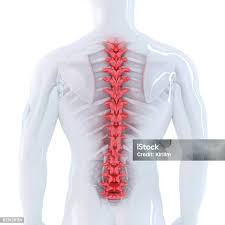
The spine is divided into four regions: the cervical (neck), thoracic (mid-back), lumbar (lower back), and sacral (pelvic). Between each vertebra sits an intervertebral disc, which acts as a cushion and shock absorber.


A helpful way to understand how back pain develops is the “Oreo cookie” analogy. The vertebrae function like the outer cookies, while the disc acts as the soft filling in between. When pressure is uneven—often from poor posture or improper lifting—the disc can shift or bulge. If this material presses on nearby nerve roots, it can cause symptoms such as pain, tingling, or numbness, commonly referred to as sciatica.

Your Spinal Phenotype: Stability vs. Flexibility

Not all spines behave the same. Dr. Stuart McGill describes two general movement patterns or “phenotypes” that influence how individuals tolerate stress.

Some people have a naturally stiffer, more load-tolerant spine. Others are more flexible but rely more heavily on muscular control for stability.


A stiffer spine may handle heavy vertical loads well but be more vulnerable to twisting injuries. A more flexible spine requires strong muscular support to maintain control under load.


Understanding how your body responds to movement is an important step in preventing injury and choosing the right type of training.

Building Core Stability: The Foundation

Protecting the spine starts with building a stable base of support around it. This is often described as creating a “core canister” that helps distribute load and prevent excessive strain on discs and joints.


One of the most widely recognized approaches to core stability comes from Dr. Stuart McGill’s “Big Three” exercises. These movements are designed to strengthen the core without placing unnecessary stress on the spine.


The curl-up strengthens the abdominal wall while maintaining a neutral spine, avoiding the strain associated with traditional sit-ups. The side plank builds lateral stability and helps prevent collapse through the hips and torso. The bird dog reinforces coordination and teaches the body to resist unwanted rotation during movement.


Together, these exercises improve control, endurance, and spinal support in a safe and effective way.

Daily Movement Strategies for Spine Health

Improving back health is not just about exercise—it also depends on how you move throughout the day.

Small adjustments in posture, positioning, and movement patterns can significantly reduce stress on the spine over time. The goal is to maintain a balance between mobility and stability while avoiding repeated strain in vulnerable positions.

Moving Toward a Pain-Free Spine

Back health is not achieved through a single exercise or short-term fix. It is built over time through consistent movement, awareness, and proper loading.


By understanding how your spine functions and applying these evidence-based principles, you can reduce injury risk, improve performance, and move with greater confidence.


The goal is not just to eliminate pain, but to create a spine that is resilient, adaptable, and capable of supporting your daily life.

Want to discuss your situation? Schedule an Appointment Today.

References