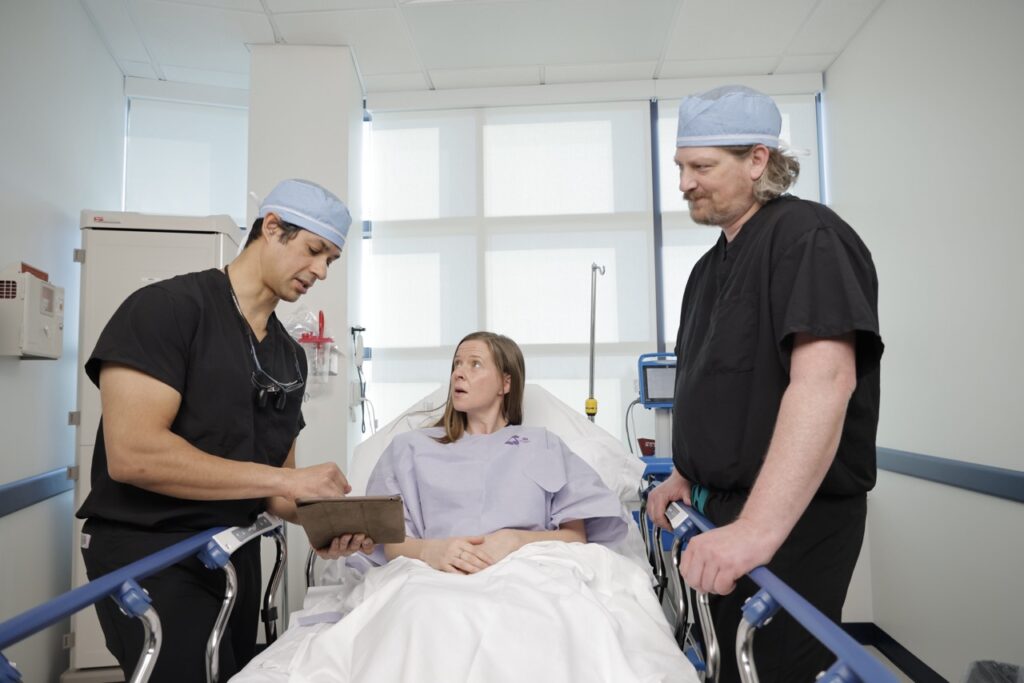
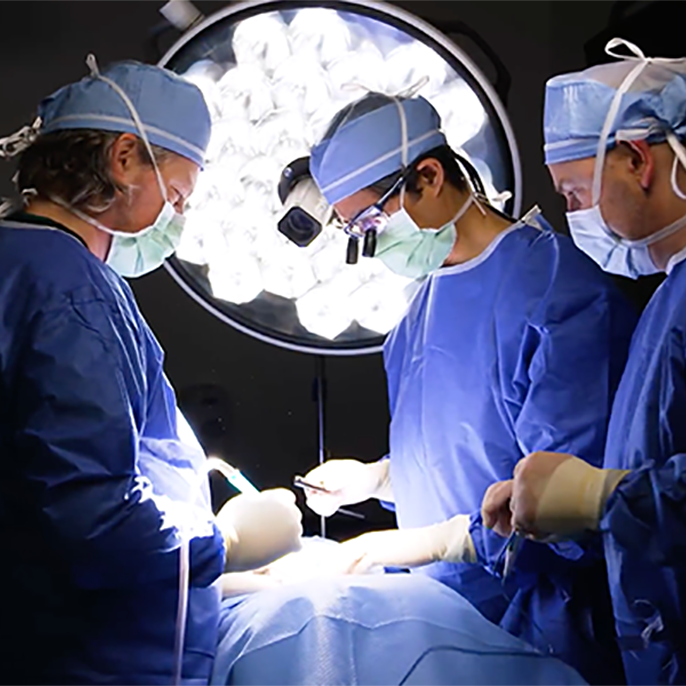
From the first visit to full recovery, your care with Dr. Ronjon Paul is designed to be thoughtful, individualized, and transparent.

Proudly Affiliated with:

(630)646-7000


Lateral Interbody Fusion

About the Procedure

Small Incisions Provide Big Relief 

Dr. Paul performs a Lateral Interbody Fusion procedure to allow for a significant release of the disc and lateral ligaments, allowing for considerable bone position improvement.


After positioning you on your side, the entire procedure is performed through one or two small incisions. Tubes and dilators are used to access the spine and remove the disc. X-ray guidance and current Neuromonitoring techniques make this procedure less invasive and safer.

read more

The procedure allows for a significant release of the disc and lateral ligaments, so considerable bone position improvement can occur. A large cage device with donated bone is used to stabilize the area and promote fusion. Dr. Paul often uses bone graft subsitutes as well.


The cage is specifically sized to restore as much normal alignment as possible. Dr. Paul typically plans for potential sizes and realignment before surgery. He also uses live intraoperative technology to monitor realignment during surgery as well.


Dr. Paul will sometimes apply screws and/or a plate to help fix the cage in place. Depending on your situation, he is often required to perform surgery from the back as well. This can involve placing hardware to help support your lateral fusion.

Lateral Interbody Fusion

By the Numbers

Years of Experience
0 +
Of Surgeons Proctored
on 3 Different Continents
0 s
Of Levels Reconstructed
500 +
High-Volume Lateral Fusion
Practice in Region
0 st
What to expect

How Long Does It Take Dr. Paul to Perform the Lateral Interbody Fusion?

Approximate surgical times would be 45 minutes to 75 minutes for one level, one hour 15 minutes to one hour 45 minutes for two levels, and two hours for three levels. Remember, substantially more time is involved in putting you to sleep, prepping, and draping prior to surgery, and then more time is required to wake you up. As a result, many additional hours are required.

If additional surgery is required from the back, please add an additional hour and a half to two hours.

read more

Dr. Paul usually calls the waiting room to briefly update a family member or friend about you. Kevin will also typically check on you in the recovery room and speak to the nurse and Dr. Paul about your recovery. Nursing will let your family know when they can see you. The wake-up and recovery time varies quite a bit but is often more than two hours.

anterior lumbar fusion with dr. ronjon paul
Preparing for Surgery

Making arrangements before surgery helps ensure all necessary steps are taken and allows you to focus on recovery.

anterior lumbar fusion with dr. ronjon paul
Day of Surgery

Information to help you arrive on time for your procedure and to better understand the process on procedure day.

anterior lumbar fusion with dr. ronjon paul
After Surgery

After surgery, you can expect some pain. Your surgeon and the staff will use every reasonable measure to help.

Long-Term Recovery

Explore Dr. Paul’s approach to long-term recovery, focusing on tailored treatment plans and ongoing support.

Common Surgical Risks of Lateral Interbody Fusion

We have attempted to define the more common risks of surgery under each of the procedures outlined. It is impossible to outline all potential poor outcomes, but we have attempted to do so in good faith. It has not been formed as legal protection for us, only to better inform you. Please read them thoroughly.


Infections are a known complication of lumbar surgery. Infection rates are more associated with smoking, poorly controlled diabetes, obesity, and other health factors. Less invasive and shorter procedures also have lower complication rates. Infections requiring additional surgery are extremely rare in Dr. Paul’s practice.

read more

Bleeding can be a serious complication since blood accumulation can compress the spinal cord or nerve roots. For that reason, we require discontinuing blood thinners, some anti-inflammatories and all herbal medications.


Spinal Leaks are a known complication in spine surgery but typically can be managed. They occur approximately 3 to 5% of the time They can be the result of adherent bone, disc, ligament or scar tissue to the dura and the membrane surrounding your nerves or spinal cord. They are far more associated with revision surgery, severe nerve compression and advanced age. If this occurs, we typically repair the leak during your operation. You may be required to lay flat for a short period of time afterwards. Late presenting or persisting spinal leaks can require additional surgery. Spinal leaks typically do not affect long term outcomes.


Neuropraxia & Nerve Injury - Nerves under pressure can react with pain or increased weakness after being decompressed. These issues are expected and usually resolve with treatment or time. The goal of fusion is to realign and improve the position of the spine which can cause some nerves to be stretched and also induce typically temporary changes. Rarely, these changes are permanent As a precaution, Dr. Paul utilizes a state-of-the-art nerve and spinal cord monitoring system to avoid neurologic problems.


Non-Union - Not all fusions heal. Some heal as early as three months, but many take longer. Some fusions require a year to heal. Dr. Paul’s team gets x-rays regularly during the first year and meets with you to make sure the fusion is successful. Some fusions will require revision surgery to fix the problem.


Medical Complications related to the heart, lung and kidneys and other organs are also a possibility. Although shorter less invasive procedures are associated with lower complication rates, they can still occur. We work closely with your primary care doctor and other specialists to make sure your medical conditions are optimized prior to surgery.


Thigh Weakness – The Procedure requires the surgeon to dilate and retract tissues in a muscle that allows you to raise your leg and flex your hip. It is not unusual to have some temporary weakness and numbness in this area. It can occasionally be more pronounced and last longer.

lumbar interbody fusion surgery with dr. ronjon paul

Patient Guide – After Surgery

your guide to optimal recovery

The First Few Days After Surgery

The initial days following surgery are crucial. This section offers key details and helpful tips to ensure a smooth recovery process. Learn what to expect and how to stay on track towards effective healing.
 

How to Handle Postoperative Pain

Naturally, once anesthetics have worn off, pain will become increasingly evident in the areas involved in a surgical procedure. You may not have much incisional pain after surgery because local anesthesia is injected at the time of surgery. This will wear off in the evening. We recommend you use the pain medicine prescribed or muscle relaxant to avoid the potential for getting behind your pain.

Dr. Paul will prescribe painkillers, also known as analgesics, to reduce the discomfort of this post-surgical recovery period. Medications prescribed can range from over-the-counter NSAIDs (after the first five days) to potent prescription opioids, depending on the projected severity of pain. If you are or have undergone a fusion procedure, you should avoid NSAIDs for the first 6 weeks. Patients should take care to manage their dosing relative to the pain experienced. Opioids can usually be tapered off within the first two weeks of surgery. NSAIDs may be taken with protective measures for the gastrointestinal system, such as proton-pump inhibitors (PPIs) such as omeprazole, antacids such as TUMS, and bismuth salts such as Pepto Bismol to reduce the risk of ulcer formation.

practical advice for healing

More Post-Surgical Tips

Every recovery is unique, and small adjustments can make a big difference. This section provides helpful advice to manage daily activities, enhance comfort, and promote healing as you regain strength.
 
wound care after anterior lumbar fusion with Dr. ronjon paul

Incisional Care

Taking proper care of your incision is essential for healing. Follow these guidelines to ensure a smooth recovery:

    • Be sure to keep the wound dry by changing the dressings at least once a day, more if needed.
    • Your incision may drain for the first week or so after surgery. This is common and expected and should lessen as you get further out from surgery.
    • Regular dressing changes will prevent problems.
    • A wet dressing will breakdown the healing skin and may lead to delayed healing and possibly infection.
    • You may shower 72 hours after surgery, but you must keep the wound dry. If you cannot keep the wound dry, please take a sponge bath until your first postoperative visit to discuss.
    • Concerning signs include foul smelling drainage and a “tomato red” wound.
sleeping after anterior lumbar fusion surgery with dr. ronjon paul

Nighttime and Transitions

It is very common to have increased pain at night and when you first get up out of bed. Any time you remain in one position for an extended period of time, the muscles may tighten and swell, and you can experience pain. As a result, transitioning can bring on pain.
Transitioning includes lying to sitting, sitting to standing. Anticipate this and use medication appropriately and or take time to do these activities. Do not try to move quickly. You won’t do anything to harm your surgery but you may have an increase in pain. This will improve with time.


Activity

After your surgery, it’s important to follow these guidelines to ensure a smooth and successful recovery. Daily walking is highly encouraged as part of your healing process. Start with short distances and gradually increase both the distance and duration each day. If you need to climb stairs, you may do so as necessary, but take your time and avoid overexertion.


Please adhere to a 10-pound lifting limit until your follow-up appointment. Additionally, avoid bending or twisting at the waist, as these movements can strain your healing body. Driving is not permitted while you are taking pain medications or muscle relaxants, so plan accordingly.


Refrain from sexual activity for the first two weeks after surgery to allow your body adequate time to recover. If physical therapy is deemed necessary, it will be arranged during your first follow-up appointment to support your rehabilitation journey.


navigating the stairs after anterior lumbar fusion surgery with dr. ronjon paul

Stairs and Toilets

There are no post-operative restrictions in climbing or descending stairs. 


You may experience mild to moderate discomfort when using stairs immediately after surgery, but this is normal and won’t harm your healing. Take your time and use handrails for support. Similarly, getting on and off the toilet may feel uncomfortable initially. For lower toilets, a raised toilet seat or grab bars can provide added comfort and stability. Remember to move carefully as your body adjusts during this recovery phase.


Patient Guide – Long-Term Recovery

Staying Prepared and Confident in Your Recovery

Navigating the First 3 Months

walking the dog after anterior lumbar fusion with dr. ronjon paul

2 – 6 Weeks After Lateral Interbody Fusion

We often talk to patients about the first two weeks being the most difficult after a lumbar fusion. The first 2 days are the hardest in that 2 weeks. Although lateral fusions may have less back pain than traditional fusions, people sometimes get some numbness and weakness in their thigh. The more generally active you are the more the muscle soreness improves. Please do not just lay in bed.

In the early weeks, gradually increase activities. Remain on your feet for more extended periods and improve your walking distances. You may return to a sedentary job in as little as 2-3 weeks but with no bending, twisting, or lifting more than 10 pounds. Sit only in chairs with good lumbar support.

You may start a regular aerobic activity such as vigorous walking, Stairmaster, or low impact aerobic exercise classes if allowed after the first follow up appointment. This is typically within 2-3 weeks. Once you are off any narcotic pain killers, you are free to drive from our standpoint.

read more

From a mechanical perspective, you lose some motion with any fusion. The question becomes how your remaining levels and hip joints compensate to retain your function and everyday lifestyle. Dr. Paul’s team rarely relies on braces and extensive immobilization. The instrumentation and current spinal techniques generally create enough stability to allow the bones to fuse. As a result, we allow people to move sooner after surgery. This also helps to maintain strength and flexibility in the remaining portions of your core and spine. If necessary, we typically order physical therapy after your two-week visit with Kevin. Exceptions would include fusions involving four or more levels and people with osteopenia.

6 – 12 Weeks After Lateral Interbody Fusion

After the first six weeks, we typically decrease restrictions. If you were given a brace, it is typically no longer required, and we allow for more bending or twisting as required for normal everyday activities. After the first six weeks, we typically decrease restrictions. This time period varies greatly based on how many levels have been fused.

We will often raise the lifting restriction to 20 to 30 pounds. You may return to light duty or physical labor if pain-free and allowed by your surgeon—with minimal bending or twisting. We do not recommend returning to work if you commute more than one hour each way. You may swim after six weeks. Continue your physical therapy exercise program. You may be shown specific therapeutic exercises at your 6-week visit.

read more

The most dramatic changes will take place in the first 8 weeks post-op. Even if you experience some of your pre-op pain during this time you should not be too concerned. We follow our patients for a year post-op knowing the nerves may take a long time to heal. Most feel significantly better after the first week or two.

swimming after anterior lumbar fusion with dr. ronjon paul
driving after anterior lumbar fusion with dr. ronjon paul

Travel and Transportation

You may travel by car for more than 3 hours in 2-3 weeks, but with frequent breaks. You may travel by plane in 4-weeks for trips less than 4 hours. After 6 weeks, you can resume all travel. Discuss international travel with Dr. Paul’s team. You may drive as soon as you are off narcotic painkillers.

How Do Patients Function Long Term After Lateral Interbody Fusion?

With proper post-operative activity, therapy and positive mindset, people lose minimal function with a short lumbar fusion. The goal is for improved overall function with surgery. The degree to which people notice a loss of motion is very subjective and individual. From a mechanical perspective, you lose some motion with any fusion. The question becomes how your remaining levels and joints compensate to retain your function and everyday lifestyle. Dr. Paul’s team rarely relies on braces and extensive immobilization. The instrumentation and current spinal techniques generally create enough stability to allow the bones to fuse. As a result, we allow people to move sooner after surgery. This also helps to maintain strength and flexibility in the remaining portions of your core and spine. If necessary, we typically order physical therapy after your 2-week visit with Kevin. Exceptions would include fusions involving four or more levels and people with osteopenia.

read more

It’s especially essential to maintain or improve motion through your hips, knees, and upper back after a lumbar fusion. Flexibility, core strengthening, and an emphasis on function during the postoperative course helps to optimize your motion.


Dr. Paul typically does not have long term restrictions for his patients once they have successfully healed.

Will the Fusion Affect the Health of the Rest of My Spine?

This is a complex discussion. A fusion can place some stress on other levels of your spine. However, how and why it does this can be controversial and depends on your individual situation and predispositions. Your surgery was done for a degenerative condition that may affect other parts of your spine in the future. If you have had surgery at one level in your spine, it is possible that the degenerative process could take place at another level. Since the spine has 36 levels, this is not unusual over a lifetime. Most people handle degenerative difficulties with self-care and non-operative care. That being said, Dr. Paul and his team go to great lengths to minimize the chances of needing additional care for your spine. That includes careful surgical planning, intraoperative decision making, and post-operative care.

When to Call Our Office

After Hours
  • Increasing drainage from a surgical wound or fevers greater than 101 degrees
  • Significant throat swelling (after neck surgery)
  • Loss of control of bowel or bladder
  • Potential need to postpone scheduled surgery for the next business day
During Business Hours
  • To make an appointment
  • Discuss or obtain test results
  • Medication refills
  • Inquiries regarding insurance, billing, or disability paperwork

We strongly recommend implementing the use of myChart to contact the office. Our staff monitors the messages during business hours.

Lateral Interbody Fusion

Would you like more information? Download these guides.